



متن انگلیسی
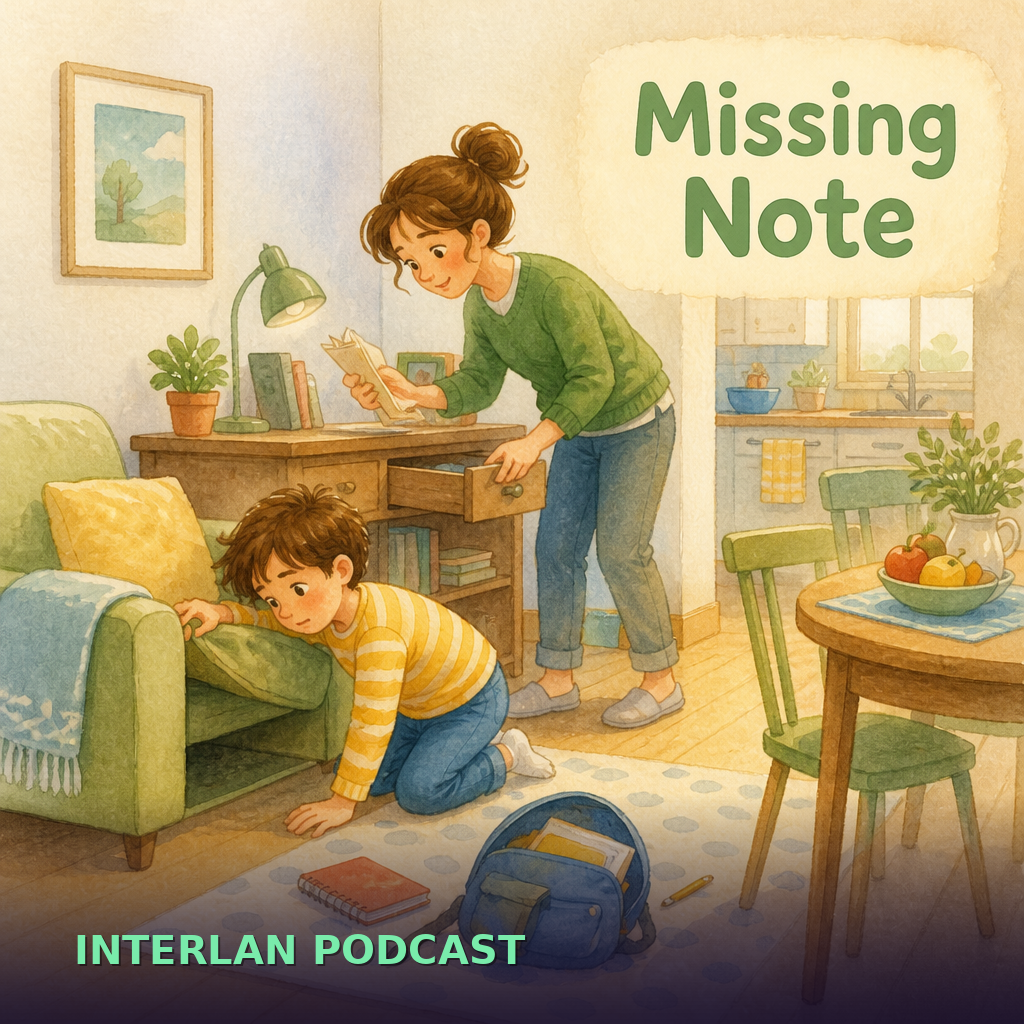
Mia: Dad, have you seen my homework note? I need it for tomorrow, and it was on my desk a minute ago. Now it’s missing, and dinner is almost ready.
Dad: I haven’t seen it, but don’t worry. We can look together. Could you help me look? Start with your desk, and I’ll check the kitchen table.
Mia: Yes, of course. It might be under my books, or maybe it fell behind the sofa. I was holding a notebook, my pencil case, and my bag at the same time.
Dad: That sounds possible. Let’s check the sofa first, then the bedroom. Sometimes a paper slides off a table and hides in a very ordinary place.
Mia: I’m looking here. No note on the sofa, no note on the floor, and no note under the cushion. Have you seen it anywhere near the lamp or the desk?
Dad: Not yet. It might be in the bedroom, near your school bag. Sometimes homework papers travel to the strangest places when we are busy.
Mia: Wait, I found something! It was on the bedroom chair, under my sweater. That was sneaky. I walked past it twice and didn’t see it at all.
Dad: Great job. You stayed calm and looked carefully. That is a useful skill. When something is missing, calm questions and clear guesses help a lot.
Mia: Thanks for helping me look. I like saying, Have you seen my homework note? and It might be on the chair. Those phrases make it easier to ask.
Dad: Exactly. You can also say, Could you help me look? and Let’s check the kitchen. Simple, polite English helps when a small problem appears at home.
Mia: Got it. Homework note found, problem solved, and dinner can start. Next time I’ll put it in one safe place, not three different places at once.
Dad: Good plan. And if it goes missing again, you’ll know what to say: Have you seen my homework note? Could you help me look?
ترجمه فارسی
Mia: بابا، برگه تکلیفم را دیدهای؟ برای فردا لازم دارمش و یک دقیقه پیش روی میزم بود. حالا گم شده و شام هم تقریباً آماده است.
Dad: من آن را ندیدهام، اما نگران نباش. با هم دنبالش میگردیم. میتوانی کمکم کنی بگردم؟ از میزت شروع کن، من هم میز آشپزخانه را چک میکنم.
Mia: بله، حتماً. شاید زیر کتابهایم باشد، یا شاید پشت مبل افتاده باشد. من همزمان یک دفترچه، جامدادیام و کیفم را دستم گرفته بودم.
Dad: این احتمال دارد. اول مبل را چک کنیم، بعد اتاق خواب را. بعضی وقتها یک برگه از روی میز سر میخورد و در یک جای خیلی معمولی قایم میشود.
Mia: اینجا را میگردم. نه روی مبل خبری از برگه هست، نه روی زمین، و نه زیر کوسن. نزدیک چراغ یا میز آن را جایی ندیدهای؟
Dad: هنوز نه. شاید توی اتاق خواب باشد، نزدیک کیف مدرسهات. بعضی وقتها وقتی سرمان شلوغ است، برگههای تکلیف به عجیبترین جاها میروند.
Mia: صبر کن، چیزی پیدا کردم! روی صندلی اتاق خواب بود، زیر پلیورم. خیلی یواشکی قایم شده بود. دو بار از کنارش رد شدم و اصلاً ندیدمش.
Dad: آفرین. آرام ماندی و با دقت نگاه کردی. این یک مهارت مفید است. وقتی چیزی گم میشود، سؤالهای آرام و حدسهای روشن خیلی کمک میکنند.
Mia: ممنون که کمکم کردی بگردم. من دوست دارم بگویم: Have you seen my homework note? و It might be on the chair. این عبارتها پرسیدن را آسانتر میکنند.
Dad: دقیقاً. همچنین میتوانی بگویی: Could you help me look? و Let’s check the kitchen. انگلیسی ساده و مؤدبانه وقتی یک مشکل کوچک در خانه پیش میآید خیلی کمک میکند.
Mia: فهمیدم. برگه تکلیف پیدا شد، مشکل حل شد، و شام میتواند شروع شود. دفعه بعد آن را در یک جای امن میگذارم، نه در سه جای مختلف همزمان.
Dad: برنامه خوبی است. و اگر دوباره گم شد، میدانی چه بگویی: Have you seen my homework note? Could you help me look?
واژگان کلیدی
- homework — تکلیف مدرسه
I need to finish my homework tonight. - missing — گمشده
My note is missing from the desk. - look for — دنبال چیزی گشتن
Let’s look for the paper together. - sofa — مبل
The book is behind the sofa. - desk — میز تحریر
My pencils are on my desk. - found — پیدا شد
We found the homework note quickly.
نکات زبانی
- برای پرسیدن با احترام از Have you seen... ? استفاده میکنیم، یعنی «آیا دیدهای...؟»
- Might برای احتمال است: It might be on the table یعنی «شاید روی میز باشد».
- Could you help me look? یک درخواست مودبانه برای کمک است.
- Let’s check... برای پیشنهاد آرام و دوستانه استفاده میشود.
- جملههای کوتاه و ساده در موقعیتهای روزمره، طبیعی و خیلی کاربردی هستند.